Live on Elysium testnetWallet only, no sign-up
Your dead bag is worth something.
Projects pay holders of dead tokens to burn their bags and join them, priced on what each wallet actually lost.

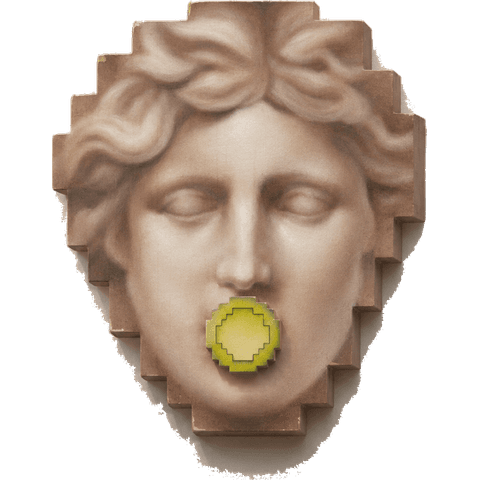
Danake
Marble on a stepped wooden panel, one coin for the ferryman. She follows you. Take the coin.
Live figures
- Open Fares
- 0
- Budget on offer
- 0
- Bags burned
- 0
- Wallets crossed
- 0
Most tokens die. The wallets behind them do not.
Most tokens die.
On a launchpad chain almost every token goes to zero within days. Holders are left with a bag nobody will buy.
Statement 1A dead bag is worthless. The wallet behind it is not.
A wallet that paid for a token and held it through the fall is exactly the holder a living project wants.
Statement 2Airdrops by balance pay the snipers.
Snapshot airdrops reward whoever holds the most: the bots and bundles that bought cheapest, not the people who lost.
Statement 3
Paid for, minus what it is worth.
- proven loss
- = paid − value now
- rate
- = min(max rate, budget ÷ all losses)
- you receive
- = proven loss × rate
Value is what the token's own curve would pay for the bag at the snapshot. Tokens you received by transfer cost zero, so they never carry a loss.
What you paid for the tokens you still hold.
Set by the Fare's payer, paid in their token.
Paid in the payer's token, streamed over the Fare's vesting period.
Four words.
- 01
Roll
The loss ledger of one dead token at one snapshot: for each wallet, what it paid in HYPE for the tokens it still holds, minus what they are worth. Tokens received by transfer cost zero.
- 02
Fare
An offer. A payer deposits a budget in any ERC-20 or WHYPE and sets the rules: target, snapshot, max rate per HYPE lost, cap per wallet, vesting, optional Stay clause.
- 03
Crossing
A holder burns the bag during the window. At close the budget is shared pro rata to proven losses, never above the max rate. Surplus returns to the payer. Payment streams over the vesting.
- 04
Stay
Optional. The stream continues only while the wallet still holds what it has already received. If it sold, the rest returns to the payer.
$CAT opens a Fare on $DOG.
| Wallet | Bag held | Paid for it | Bag value | Proven loss | Receives | Share in a snapshot airdrop |
|---|---|---|---|---|---|---|
| Lina, late buyer | 6M $DOG | 1.2 HYPE | 0.05 HYPE | 1.15 HYPE | 5,750 $CAT | 1x |
| Block-1 sniper | 50M $DOG | 0.3 HYPE | 0.42 HYPE | 0 | 0 | 8.3x |
Round numbers. The 3% protocol fee is left out of the example.
The late buyer who lost money is paid. The sniper who made money is not, though a snapshot airdrop would have given it 8.3 times more.
Anyone who wants holders that stay.
A live token courting a dead rival's community
Offer your token to the people who believed in the one that died.
A team relaunching as v2
Let holders of the old token cross into the new one, priced on what they lost, not on what bots hold.
A community takeover
Rebuild around the wallets that actually paid, with the Stay clause to keep them.
A launchpad or app courting traders rugged elsewhere
Pay proven losers to try your venue instead of buying attention from farmers.
Every shortcut has a door shut on it.
- Buy the dead token after the Fare is announced
- The snapshot is in the past. Buys after it do not exist in the Roll.
- Receive tokens from another wallet
- Received tokens cost zero, so they carry no loss.
- Sell, then claim
- Every outflow reduces the cost basis in proportion. With the Stay clause, selling the payout ends the stream.
- Claim twice
- One crossing per wallet per Fare, and a loss counted once cannot be counted again with the same or an earlier snapshot.
- Snipe a cheap, large bag
- Loss is what you paid minus what the bag is worth, not how much you hold. A cheap bag has little or no loss.
- Wash-trade a fake loss between two wallets
- A snapshot in the past, the per-wallet cap and a minimum purchase age reduce it. They do not eliminate it.
The coin for the ferryman.
Once it exists, 3% of every Fare budget buys $DANAKE on the market. Half is burned. Half funds the Ferry: one free crossing per week, to a dead token chosen by stakers.
A fair launch on an Elysium launchpad (Clover), with no presale and no private allocation. Supply, allocation and date: to be announced on @danakefun.
Asked often.
What is a Fare?
Why would a project pay me?
How is my loss proven?
What about tokens I received by transfer?
Why do I have to burn the bag?
When do I get paid, and how much?
What is the Stay clause?
Can I use the same bag in two Fares?
Is there a $DANAKE token?
Is this live with real money?
Cross over.
Run the whole loop on testnet in the sandbox: make a token, watch it die, open a Fare on it, burn and get paid.